

Tooth shades vary from warm, natural tones to ultra-bright, professionally whitened ones. The most common guide used in Turkish dentistry is the VITA shade guide, which categorises shades into four groups: A (reddish-brown), B (reddish-yellow), C (greyish), and D (reddish-grey). Within these, B1 is often considered the whitest natural shade.
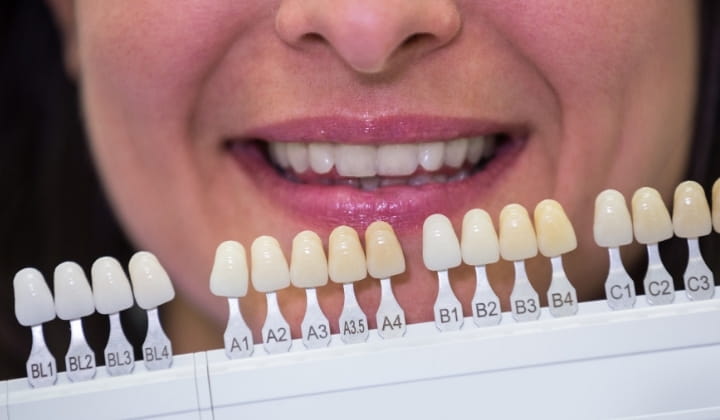
For those wanting an even brighter look, there are 'bleached' shades like OM1, which go beyond natural whiteness for that dazzling, Hollywood-style smile. Whether you're aiming for a natural glow or a show-stopping white, the right shade depends on your preferences and what suits your overall look best. Your dentist will help guide you toward the perfect choice!
What colour is A1 tooth shade?
A1 tooth shade is a very natural white. Not that super bright, fake 'Hollywood' white.
In dentistry we use something called the Vita shade guide, and A1 is one of the lighter shades on that scale. It doesn't look artificial. There's a very soft yellow undertone in it, and that slight warmth is what makes it look like a real tooth instead of porcelain tile.
A lot of patients ask for the whitest possible colour, but as dentists we usually tell them this: extremely white isn't always the most natural. A1 is kind of the sweet spot.
So, if you imagine a clean, youthful smile that doesn't scream 'veneers', that's A1.
Is A1 tooth shade good for your smile?
Yes, it can be. Honestly, A1 is a very safe, natural-looking white. It's bright but not fake.
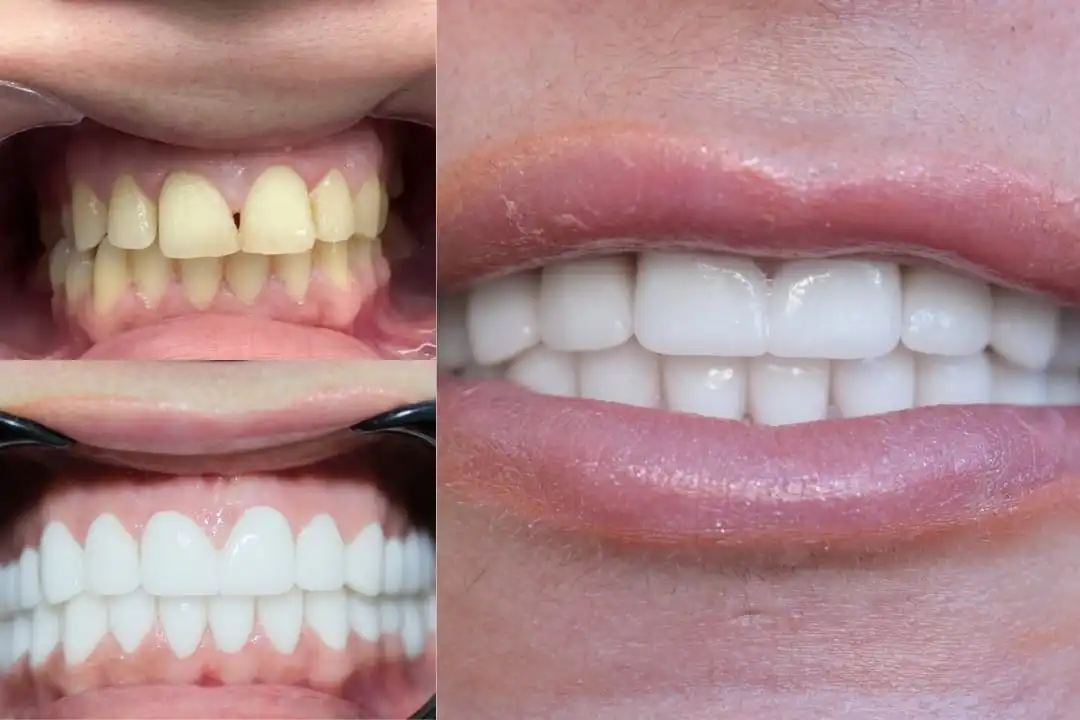
But here's the real answer… The 'best' shade is whatever matches your face, your skin tone, your age, and what you personally want. Some people love a super bright smile. Others want something softer and more natural. And both are okay.
In the end, the right shade is the one that makes you smile confidently in the mirror and think, yes, this feels like me.
A1 vs B1 differences: Hue and brightness
This is probably one of the top questions I hear in the clinic. A1 or B1? People are always curious because both shades are light, both are very popular, and honestly, both can look amazing.
They're close, yes… but they're not the same. The difference is subtle, more about the undertone and the overall vibe they give. One feels a bit warmer, the other a bit brighter.
So, instead of making it confusing, let's lay it out in a simple comparison table. That way you can clearly see how A1 and B1 differ in tone and appearance and how they actually look on a real smile.
| Feature | A1 tooth shade | B1 tooth shade |
| Overall look | Soft white | Bright white |
| Base tone | Slightly warm | Cool, clean |
| Natural appearance | Very natural | Less natural |
| Whitening result match | Moderate bleaching | Advanced bleaching |
| Used in veneers? | Often | Very often |
| Common in real teeth? | Yes | Rarely |
| Celeb smile vibe | Subtle elegance | Flashy and striking |
| Pairs with skin tones | Warm to neutral | Neutral to cool |
| First impression | Healthy & calm | Dazzling and polished |
Can you achieve an A1 tooth shade naturally?
Yes, sometimes you can, especially if your natural teeth are already on the lighter side and you maintain them well. But honestly, most people need professional whitening to reach a true A1 shade.
How should I choose a tooth shade for partial restorations?
Let me say this first… choosing a tooth shade is not about going as white as possible. I know everyone walks in saying, 'I want the whitest,' but honestly, the right shade is the one that fits you.
For partial restorations, like a single crown or a few veneers, blending is everything. That restoration should disappear next to your natural teeth. If it's even slightly too white or too opaque, the eye catches it immediately.
Where do we start? Skin tone matters more than people think. If you have warm or olive skin, softer whites like A1 usually look very natural. If your skin is fair or cooler toned, you can sometimes carry brighter shades like B1 more easily. But again… It's about balance, not 'blinding white'.
Hair and eye colours also play a role. Dark hair with light skin creates strong contrast, so slightly brighter teeth can work beautifully. Age matters too. Super bright shades on a mature face can sometimes look a bit artificial. Not always, but sometimes.
And very important, if you're planning whitening, do it before we make the restoration. Porcelain doesn't whiten later.
Choosing the best colour for your face
The best tooth shade isn't the whitest one; it's the one that complements your skin tone, hair, eyes, and overall features. When the colour fits your face naturally, your smile looks fresh and balanced, not artificial.
FAQs
Is A1 tooth shade too white for a natural look?
No, A1 is not too white for a natural look. It's bright, yes, but it still has a soft warmth that keeps it looking real rather than overly artificial.
What is the difference between A1 and darker shades like A3?
The difference between A1 and A3 is mainly brightness and warmth. A1 is lighter and cleaner, while A3 is noticeably darker and has a stronger yellow or warm undertone.
In real life, A3 can look very natural, especially on adults, because most natural teeth aren't super white. A1 gives a brighter, more youthful appearance. A3 feels softer and more mature.
Can you whiten teeth to match an A1 shade at home?
Sometimes, yes… but it depends on your starting shade. If your teeth are already fairly light, over-the-counter whitening kits might get you close to A1 with consistent use.
But honestly, if your teeth are darker, home kits usually won't be strong enough to reach a true A1. Professional whitening is better and faster for this aim.
What tooth shade is considered "white" in dentistry?
In dentistry, shades like A1 and B1 are generally considered white. They're bright and clean-looking but still natural.
The whitest shade is OM1. It's even brighter than B1 or BL1, and you won't find it in natural teeth. OM1 is often used in veneers or cosmetic makeovers to create that super-clean Hollywood smile. It looks bold and icy and stands out, especially under lights.
Book your appointment now and start smiling with confidence.
How to achieve perfect tooth shade?
Perfect tooth shade is the cornerstone of a healthy smile. Achieving those natural, bright white teeth everyone dreams of is actually possible in a few simple steps.
- Teeth whitening: At-home or professional tooth whitening is one of the most common and quickest solutions.
- Porcelain veneers: Porcelain veneers are a long-lasting alternative that eliminates problems with the colour and shape of your teeth, providing aesthetically pleasing results.
- Composite bonding: Composite bonding can quickly shape your teeth and achieve the desired whiteness.
- Dental crowns: Zirconium crowns completely cover the top of your teeth and are an effective solution for those who need whitening.
What are you waiting for to bring your teeth shade to A1 level? With Wink Smile Turkey, you can make your smile perfect immediately and feel more confident. Whether for daily use or special occasions, your porcelain dental veneers in Antalya will always make you shine.