

You want your dental implant, the one you entrust your smile to, to both blend seamlessly with your body and look completely natural. This is where zirconia implants stand out as a very strong alternative to traditional titanium implants. Essentially a completely metal-free, biocompatible ceramic, zirconia not only meets aesthetic expectations but also sets a brand new standard in oral health by fusing with bone as well as, or sometimes even better than, titanium. To be honest, for those with metal sensitivity or those who don't want to see that old "grey metal shade" on their front teeth, this material is a real turning point.
What are zirconia dental implants?
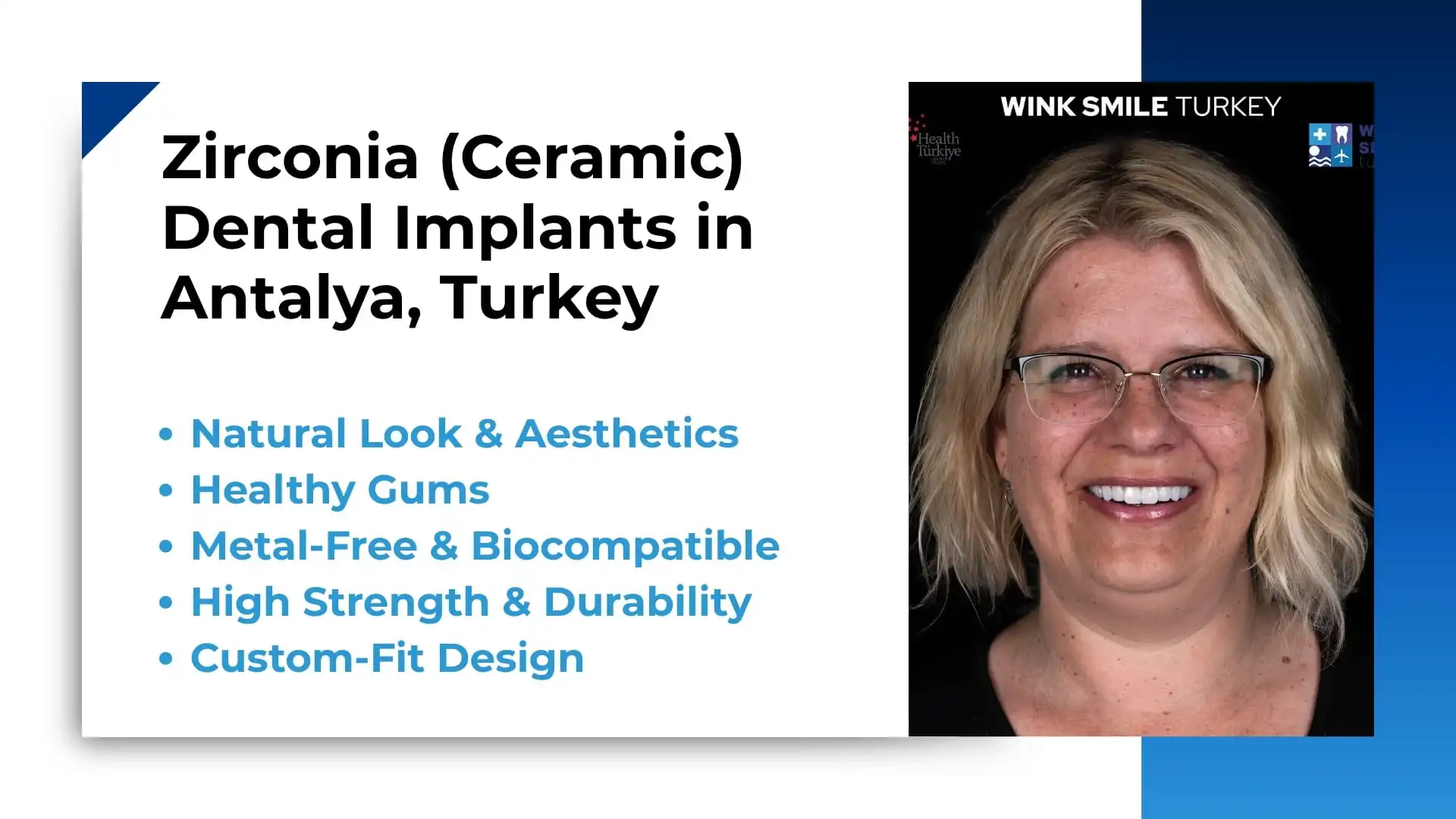
Zirconia implants, or ceramic implants, are metal-free dental implants made of zirconia, a biocompatible material that looks like a natural tooth. Once the zirconia implant is surgically placed into the jawbone, the ceramic crown is attached to the implant. Zirconia implants are one of the most popular options for many people, especially because they give a natural look to the front teeth.
Benefits of zirconia dental implants
If we look at the direct advantages of zirconia dental implants in everyday life:
- Natural smile and aesthetics: Zirconia implants are produced in their own color, i.e., white. Even if you have a thin gum structure, those annoying dark, gray shadows at the gum line, unlike traditional implants, do not form. It provides a perfect fit, especially in front teeth.
- A smooth shield against bacteria: The surface of the material is so smooth that plaque and tartar adhere much less than to titanium. We can compare this to Teflon pans in the kitchen; it doesn't want to harbor anything harmful. The result? Much healthier gum tissue and minimal risk of inflammation.
- Metal-free and biocompatible life: Your body does not perceive the ceramic structure as a foreign substance. For patients with metal allergies or sensitivities, this means a complication-free and safe treatment process.
- Fracture resistance: Forget the worry of "Will ceramic break?". Zirconia is an incredibly structurally strong material that can withstand even extreme chewing forces.
- Personalized design: Instead of mass-produced molds, it offers a completely customizable production flexibility according to each patient's oral and bone structure.
What are the disadvantages of zirconia implants?
If you are considering zirconia implants, you need to know not only the advantages but also the disadvantages you may encounter in the long term.
The same results are not obtained for every patient. The following points should be given particular attention:
- Long-term clinical data is more limited. While titanium implants have been followed for decades, there are still fewer long-term scientific studies on zirconia implants.
- They may have a brittle structure. Zirconia is quite hard, but being hard doesn't always mean being flexible. Think of a glass cup; it's strong, but it can crack with a sudden impact. Similarly, the risk of fracture under high chewing forces may be higher than with titanium.
- The range of motion in treatment planning is narrower. Angle correction options may be limited, especially with one-piece zirconia implants. This necessitates much more precise surgical placement in the initial stages.
- They are not suitable for every case. Different implant materials may be more suitable for patients with insufficient bone density, teeth grinding habits, or complex implant cases.
- The cost is generally higher. Due to the manufacturing technology and materials used, zirconia implants are often more expensive than titanium implants.
Who are suitable candidates for zirconia implants?
Zirconia implants are for people who want an implant option that is free of metal. The results can be very good, particularly in patients with metal allergies to titanium, those who desire a natural, aesthetic look in their front teeth, and patients with thin gum tissue. Patients with high aesthetic expectations may also opt for zirconia implants.
Who may not be a suitable candidate for zirconia implants?
Not every patient is an ideal candidate for zirconia implants. In individuals with severe teeth grinding or clenching, insufficient jawbone, those requiring complex surgical planning, or those with untreated gum disease, the dentist may recommend a different implant option. The most accurate decision is made after a clinical examination.
How much do zirconia dental implants cost in Turkey?
The cost of a single zirconia dental implant in Turkey can range from an average of £400 to £800, depending on the implant system used, the treatment plan, and additional procedures. Additional treatments such as bone grafting, sinus lifting, or zirconia crowns applied to the implant can increase the total cost. The exact price will be determined after an examination by the dentist and a personalised treatment plan.
How much do zirconia dental implants cost in the UK?
In the United Kingdom, the cost of zirconia dental implants ranges from £3,000 to £4,500 per tooth, but prices can vary. In contrast, the cost of a standard titanium implant for a single tooth is generally between £1,800 and £3,000.
Where can you get zirconia dental implants in Antalya, Turkey?
If you are considering zirconia dental implants, choosing the right clinic plays a crucial role in the success of the treatment.
At Wink Smile Turkey, our dentists in Antalya offer a variety of dental implant treatments, including metal-free options. Our team achieves safer and more predictable results with 3D digital imaging and personalised treatment planning.
Contact us to learn more about zirconia implants in Antalya or to explore your personalised treatment options.
Frequently Asked Questions
Are zirconia implants safe?
Yes, zirconia implants are well tolerated by the body because they are made from biocompatible ceramic material. When properly applied by an experienced dentist, they are considered a safe and successful option for treating missing teeth.
How long do zirconia implants last?
With proper oral care and regular dental checkups, zirconia implants can last for 20 years or more. The lifespan of the implant depends on oral hygiene, bone structure, chewing habits, and the correct application of the treatment.
Is a zirconia implant or a titanium implant better?
There is no single answer. Zirconia implants stand out with their aesthetic appearance and metal-free structure, while titanium implants have a longer clinical history and wider range of uses. The most suitable option is determined according to your oral structure and treatment needs.
Do zirconia implants look natural?
Yes. Zirconia implants, thanks to their white structure close to the colour of teeth, provide a more natural appearance, especially in the front tooth area. They also offer an aesthetic advantage in patients with thin gum tissue.
Can zirconia implants be used for all missing teeth?
No, zirconia implants can yield successful results in single-tooth and some short-bridge restorations. However, in complex cases with missing entire jaws or multiple teeth, titanium implants may be a more suitable option depending on the treatment plan.
Are zirconia implants as durable as titanium implants?
Yes, zirconia implants are made from a strong ceramic material with high mechanical strength. Titanium implants are supported by more years of scientific data; however, although zirconia implants are newer, they have shown flexural strength of 900-1200 MPa in long-term clinical studies.